

Start-ups, space technologies and dual-use projects. New agreement
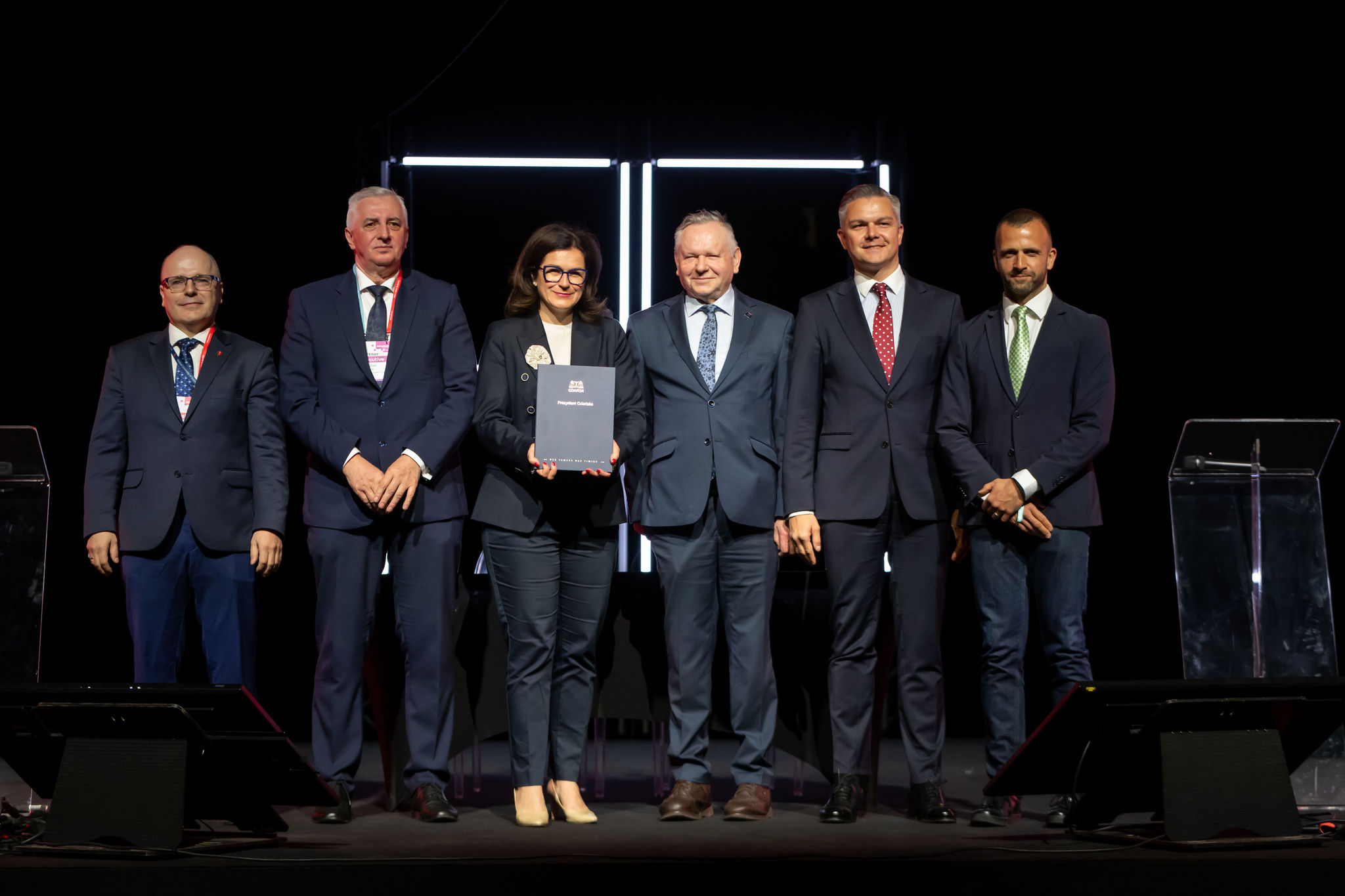
Pomerania aspires to become one of Poland’s leading hubs for future technologies and an innovation-driven economy. During Infoshare 2026, the Polish Development Fund (PFR), the City of Gdańsk, the Pomeranian Special Economic Zone (PSSE), and Pomerania’s largest universities – the Medical University of Gdańsk, Gdańsk University of Technology and the University of Gdańsk – signed a letter of intent on cooperation in the development of start-ups, space technologies and dual-use projects, i.e. technologies and solutions with both civilian and defence applications. The partners have declared a long-term commitment to cooperation aimed at strengthening the region’s technological potential and enhancing Poland’s economic security.
The agreement seeks to support the growth of technology companies, improve the commercialisation of scientific research, and facilitate projects that strengthen the competitiveness and security of Polish economy.
As part of the cooperation, the partners intend to further develop, among other initiatives, the Pomeranian Start-up Ecosystem implemented by Starter Gdańsk, the ESA BIC incubator supporting companies that utilise space technologies, and initiatives related to technological security and dual-use solutions. One of the key undertakings will also be the Dual Use Living Lab, implemented under the NATO DIANA programme. The initiative will provide an environment for testing and developing technologies with dual applications in both the civilian and defence sectors.
Innovation through collaboration
For years, Gdańsk has demonstrated its readiness to meet the technological challenges of the future.
There is no innovation without effective cooperation. The city has long been committed to implementing modern solutions and building a strong innovation ecosystem, a mission pursued daily through institutions such as InvestGDA and Starter Gdańsk. The letter of intent signed today with PFR, PSSE and our leading universities opens up entirely new opportunities for entrepreneurs in Gdańsk and across the Pomeranian region. From start-up incubation and the development of space technologies to innovative dual-use solutions—technologies with both civilian and defence applications – w e are jointly building a strong, resilient and competitive knowledge-based economy. Gdańsk is ready for the challenges of tomorrow – says Aleksandra Dulkiewicz, Mayor of the City of Gdańsk.
PFR is consistently strengthening its position as a leader in the development of Poland’s innovation ecosystem. We act as a market maker, bringing together diverse initiatives into a coherent and complementary innovation network. Through partnerships that connect business, science and public institutions, we mobilise knowledge and capital around projects of strategic importance for enhancing the resilience of the Polish economy. Through the networking of national potential, companies across Poland gain the tools and knowledge necessary for growth, with the aim of ultimately—through programmes such as Innovate Poland and PFR Deep Tech – securing investors and scaling their businesses to international markets – says Piotr Matczuk, President of the Management Board of PFR.
The new agreement strengthens cooperation between business, science and public administration – an area currently regarded as one of the key pillars of building a modern economy. The President of PSSE also highlighted the region’s potential and the need to build the market scale for ventures:
Pomerania today has a unique combination of assets: a strong academic environment, a rapidly developing start-up ecosystem, industrial infrastructure and efficiently operating support institutions. The greatest challenge is no longer the creation of new technologies itself, but rather their effective implementation into the economy and their transformation into sustainable, scalable business ventures. The signed agreement aims to connect the partners’ competencies so that more technologies not only emerge in Pomerania, but also mature here into business scale. Our focus is particularly on three areas: dual-use technologies, the space sector and advanced industry – said Mirosław Kamiński, President of the Management Board of the Pomeranian Special Economic Zone (PSSE).
Science closer to economy and security
The strength of the signed agreement lies in its academic foundation, represented by the Tri-City universities: the Medical University of Gdańsk, Gdańsk University of Technology, and the University of Gdańsk.
As the Gdańsk University of Technology, we are a natural partner in this agreement, as we have for years combined scientific research with the practical implementation of technologies in cooperation with business and public institutions. This is demonstrated by our activities in the area of dual-use technologies, including initiatives developed under the NATO DIANA programme. As a technical school of higher education, we contribute to this partnership with knowledge, research infrastructure and engineering expertise that can meaningfully support security, innovation and economic development – emphasises Prof. Krzysztof Wilde, Rector of the Gdańsk University of Technology.
The Rector of the University of Gdańsk, in turn, highlighted the systemic dimension of building competitive advantages based on knowledge:
The University of Gdańsk consistently develops cooperation with the business and institutional environment, as it is precisely within such a model that the most valuable and responsible innovations are created today. Joint activities of universities, local government, business and institutions supporting technological development represent an opportunity to build a strong innovation ecosystem in Pomerania –based on knowledge, technological security and modern skills for the future. Therefore, supporting projects related to dual-use technologies, the space sector and the transfer of research results into the economy is of key importance to us – notes Prof. Piotr Stepnowski, Rector of the University of Gdańsk.
The Rector of the Medical University of Gdańsk pointed to the importance of integrating different communities, drawing on the experience of the medical sector and translating it into the resilience of the entire economic system:
Strengthening the resilience of the Polish economy is an area in which the Medical University of Gdańsk feels particularly motivated to cooperate with the Polish Development Fund. As in healthcare, what is crucial for us is an approach based on the transfer of knowledge between the research and academic sector and the socio-economic environment. For decades, the Tri-city has been a model environment of cooperation between local government, business and academia, because without such proper circulation there is no healthy organism, society or economy – emphasises Prof. Michał Markuszewski, Rector of the Medical University of Gdańsk.
The partners also announce joint organisation of business and technology events, educational programmes, and networking activities supporting companies in the advanced technologies sector and SMEs.
The letter of intent was signed on behalf of the Medical University of Gdańsk by Prof. Michał Żmijewski, Vice-Rector for Science. On behalf of Gdańsk University of Technology, the letter was signed by Prof. Józef E. Sienkiewicz, Vice-Rector for Cooperation, while the University of Gdańsk was represented by Prof. Paweł Antonowicz, Associate Professor at the UG, Vice-Rector for Development and Finance.
2026-05-21T06:11:28Z